Short, practical briefings on the records to preserve, the deadlines to identify, and the questions to ask before a dispute gathers momentum.
Cyber & payments6 minute read
01
Digital-payment fraud: the first hour matters more than the first legal notice.
Recovery can depend on how quickly the transaction trail is preserved and reported. A useful first response is factual, time-stamped, and directed to the right institution rather than scattered across informal messages.
PreserveTransaction IDs, screenshots, account statements, URLs, device details, and messages in their original form.
EscalateNotify the bank or payment provider and retain every complaint, ticket, and acknowledgement number.
RecordPrepare one chronology linking each payment, communication, phone number, and official report.
A clear chronology, existing orders, financial records, and the child-related arrangements currently in place help separate immediate relief from the issues that can be negotiated.
ChronologyInterim reliefFinancial disclosureCustody records
Received a Section 138 notice? Start with dates and the underlying transaction.
The cheque, return memo, statutory notice, service record, invoices, ledgers, and communications should be read together. A reply prepared without that sequence can close off useful factual positions.
Statutory datesDebt recordSignatory roleSettlement position
Direct advice. Deliberate preparation. A clear next step.
Sonal Singh Chambers is a Delhi-based practice of advocates and mediators handling disputes where facts, documents, timing, and discretion all matter.
The chambers works across family and criminal litigation, cyber and payment fraud, banking and recovery, civil and commercial disputes, negotiable-instrument matters, child protection, and mediation. Clients speak directly with counsel about the immediate problem, the available forum, and the work required to move forward.
Good representation begins before the first filing: with a reliable chronology, a disciplined document set, and a realistic understanding of relief.
Courts & forums
Delhi High Court, district courts, Family Courts, DRT proceedings, and coordinated High Court representation across India.
Consultations
In person or by phone, with urgent matters identified by the next deadline or required protective step.
Office
Near Pratap Nagar Metro Station, Partap Nagar, Delhi 110007.
Practice
Start with the matter, not a menu of legal terms.
Open a practice file to see the typical issues, records, and legal work involved. The exact route always depends on the facts, stage, forum, and relief required.
01Matrimonial & Family LawDivorce, maintenance, custody, domestic violence, and settlement
Family disputes often require two tracks at once: immediate arrangements for safety, residence, money, or children, and a longer strategy for settlement or contested proceedings.
Work may include
Mutual-consent and contested divorce, pleadings, evidence, and settlement terms
Interim and final maintenance, financial disclosure, alimony, and enforcement
Custody, guardianship, visitation, relocation, and parenting arrangements
Domestic-violence applications, residence and protection orders, and connected criminal complaints
Useful first records
A date-wise chronology and copies of existing court or police papers
Income, expense, asset, and liability documents relevant to financial relief
Child-related schedules, school or medical records, and prior arrangements
02Criminal LitigationComplaints, bail, investigation, trial, and appeal
Early criminal advice is usually about preserving a reliable account, understanding the immediate procedural risk, and deciding what must be placed on record before positions harden.
Work may include
FIR-stage advice, police complaints, representations, and station-visit support
Regular bail, anticipatory bail, remand-related preparation, and protective applications
Evidence review, witness preparation, trial strategy, and cross-examination planning
Revision, appeal, quashing-related assessment, and settlement where legally permissible
Useful first records
Complaint, FIR, notice, seizure memo, medical record, or latest court order
Original messages, call details, video, location, and other digital material
A witness list and chronology that separates direct knowledge from assumption
03Cybercrime & Digital PaymentsFraud, account freezes, payment gateways, gaming, and digital evidence
Cyber matters move through several systems at once: bank escalation, payment intermediaries, cybercrime reporting, police investigation, and sometimes civil or consumer remedies.
Work may include
UPI, card, payment-gateway, merchant, investment, and online-gaming fraud
Unauthorised transactions, bank complaints, account freezes, and lien-related issues
Identity theft, impersonation, hacked accounts, harassment, extortion, and data misuse
Evidence preservation, cybercrime complaints, police representations, and recovery strategy
Useful first records
Transaction IDs, account statements, complaint tickets, and bank correspondence
Unedited screenshots, URLs, profiles, phone numbers, emails, and device details
A single chronology tying communications to each movement of money
04Banking & RecoverySARFAESI, DRT, loan disputes, enforcement, and settlements
Banking disputes are document-heavy and forum-sensitive. The first task is to map the facility, security, notices, payments, classification, and existing proceedings in one sequence.
Work may include
SARFAESI notices, objections, possession measures, and enforcement disputes
DRT and DRAT pleadings, evidence, interim applications, and appeals
Recovery proceedings, restructuring, settlement, and one-time-settlement negotiations
Fraud-related accounts, unauthorised transactions, institutional advice, and documentation review
Useful first records
Sanction letter, facility and security documents, guarantees, and account statements
Demand, recall, possession, auction, or tribunal notices with proof of service
Payment history, restructuring correspondence, valuation material, and prior proposals
Cheque matters turn on statutory timing and the underlying transaction. The instrument cannot be assessed in isolation from invoices, ledgers, authority, communications, and service records.
Work may include
Statutory demand notices and replies prepared against the complete transaction record
Section 138 complaints, defence, evidence, and cross-examination
Company, signatory, and director-liability questions in commercial matters
Settlement, compounding, appeals, and connected civil recovery
Useful first records
Cheque, return memo, notice, postal record, and proof of receipt
Agreement, invoice, delivery record, ledger, payment trail, and correspondence
Company authority documents and the role of each proposed party
Civil strategy begins with the right relief and the documents needed to support it. Jurisdiction, limitation, possession, contractual notice, and interim protection should be considered before drafting.
Work may include
Title, ownership, possession, partition, succession, boundary, and encroachment disputes
Contracts, recovery, damages, specific performance, and commercial claims
Injunctions, declarations, landlord-tenant proceedings, and execution
Real-estate agreements, allotment disputes, company matters, and related GST issues
Useful first records
Complete title chain, registration records, site or possession material, and prior proceedings
Executed agreements, amendments, invoices, notices, and payment records
A chronology identifying breach, knowledge, demand, and limitation dates
07POCSO, Child & Women ProtectionProtective relief, confidential proceedings, and survivor-sensitive representation
Protection matters require careful handling of privacy, safety, mandatory procedure, and the difference between immediate protective needs and the longer evidentiary process.
Work may include
Representation in POCSO proceedings and connected criminal matters
Protective applications, domestic-violence remedies, and child-welfare concerns
Police, support-person, medical, counselling, and legal-aid coordination where applicable
Age, identity, statement, medical, school, and digital-record assessment
Approach
Limit unnecessary circulation of identity and sensitive material
Identify the immediate safety issue before broader litigation strategy
Use age-appropriate and trauma-aware preparation without coaching evidence
08Mediation & Strategic AdvisoryPre-litigation assessment, negotiation, drafting, and structured resolution
Not every dispute benefits from immediate filing. A structured advisory or mediation process can clarify leverage, preserve relationships, and turn broad demands into enforceable terms.
Work may include
Pre-litigation case assessment, risk mapping, and document review
Negotiation planning, without-prejudice proposals, and mediation preparation
Settlement terms covering payment, performance, custody, confidentiality, or withdrawal
Legal notices, replies, opinions, and practical compliance advice
Useful first records
The agreement, latest demand, prior offers, and points already accepted or rejected
Commercial, family, or operational constraints that any settlement must address
Security, default, enforcement, and tax implications requiring separate advice
09Defined Pro Bono AssistanceSelected urgent or vulnerable matters, subject to capacity and assessment
The chambers considers a limited number of matters based on urgency, merit, vulnerability, available capacity, and whether a legal-aid institution is better placed to assist.
Assistance may be limited to
An initial consultation and identification of the correct forum
A defined notice, complaint, reply, or urgent application
Referral or coordination with legal-aid and support organisations
Representation for a clearly agreed stage rather than the entire proceeding
Assessment
Urgency and risk of irreversible harm
Basic documentary support and legal merit
Applicant circumstances, available alternatives, and current chamber capacity
Matter files
Where timing, forum, and evidence change the strategy.
These are not service packages. They show how the chambers breaks a complex brief into the first questions, the immediate work, and the proceedings that may follow.
01
Rapid response
Cyber fraud & frozen accounts
Establish the money trail, the reporting trail, and the authority responsible for the restriction or disputed transaction.
First questions
When was the transaction discovered? Which bank or intermediary received notice? Is the account frozen as a victim account, beneficiary account, or investigation-linked account?
Immediate work
Preserve evidence, consolidate acknowledgements, prepare bank and police representations, identify jurisdiction, and assess recovery or de-freezing routes.
02
Forum mapping
Banking recovery & secured assets
Read the facility, security, classification, payment history, and enforcement record as one connected file.
First questions
What notice has been served? Which measure has already been taken? What security, guarantee, or asset is involved? Is any tribunal proceeding pending?
Immediate work
Build the account chronology, review objections and limitation, identify the correct forum, and separate interim protection from settlement strategy.
03
Interim protection
Family disputes with urgent relief
Distinguish the immediate issue of safety, residence, money, or children from the final relief likely to require evidence or negotiation.
First questions
Is there an existing order? Where is the child residing? What financial arrangement currently exists? Is police or protective intervention already involved?
Immediate work
Prepare a reliable chronology, identify interim relief, preserve communications and financial records, and avoid conflicting positions across connected proceedings.
04
Statutory sequence
Cheque dishonour & commercial recovery
Test the notice timeline against the transaction documents, signatory role, accounting record, and realistic settlement position.
First questions
What was the legally enforceable liability alleged? Who signed and in what capacity? Were goods, services, loans, or adjustments actually recorded?
Immediate work
Calendar statutory dates, preserve service records, reconcile ledgers and invoices, draft the notice or reply, and assess parallel recovery options.
05
Document chain
Property, possession & civil injunctions
Identify the title or contractual right, the present possession position, the threatened act, and the interim order that could practically preserve the subject matter.
First questions
Who holds the original documents? What is registered? Who is in possession? Is construction, transfer, dispossession, or limitation creating urgency?
Immediate work
Organise the title chain, verify prior proceedings and notices, frame the correct relief, and prepare the evidence needed for interim consideration.
Founder, advocate, and certified mediator
Founder
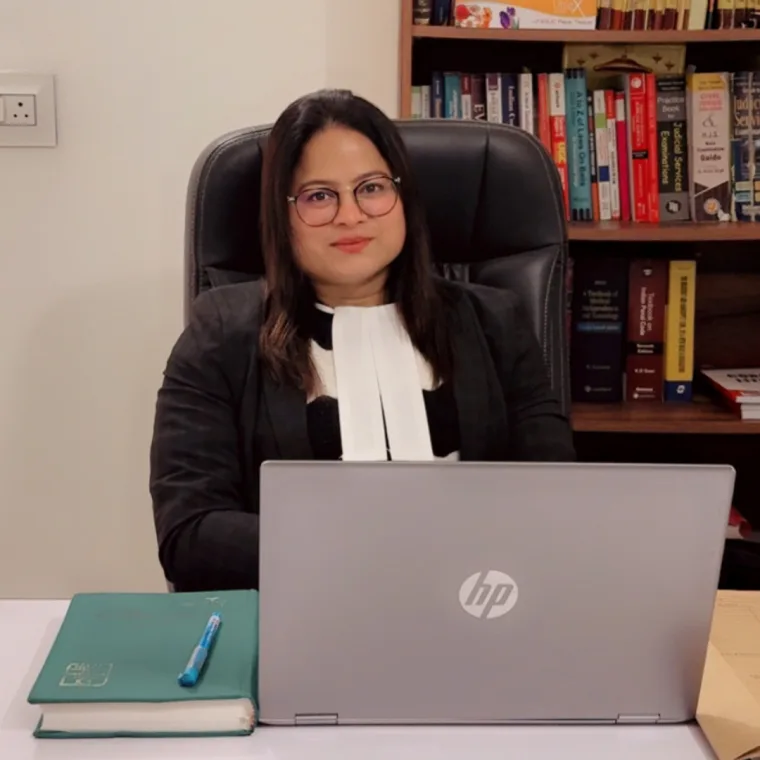
Advocate Sonal Singh
A litigation and mediation practice shaped by institutional work, child-protection matters, and direct client responsibility.
Advocate Sonal Singh has practised since 2015 across Delhi and Gurugram courts. Her work includes civil and criminal litigation, corporate advisory, institutional recovery, human rights, child protection, and mediation.
Her professional experience includes representation for financial institutions and work with legal-aid bodies, the Delhi Commission for Women, and child-rights organisations on POCSO, child labour, abuse, and survivor-support matters.
Education
LL.M. and M.Com.
Mediation
Certified following 40-hour professional training with the Delhi Dispute Resolution Society.
Institutional work
Panel counsel experience for financial institutions and public-facing organisations.
People
Counsel assembled around the matter.
The chambers draws on focused experience across family protection, criminal defence, banking, and institutional disputes.
Partner
Adv. Asmita Singh
Child rights, family protection, and POCSO matters.
Partner
Adv. Varun Verma
Criminal defence, bail applications, and trial work.
Counsel
Adv. Prabhakar Deoghar
Banking law, recovery proceedings, and institutional matters.
Additional counsel
Adv. Praveen Singh
Adv. Amarendra Chaubey
Adv. S. N. Tripathi
Local-counsel coordination is available for appropriate High Court matters outside Delhi.
Before you contact us
Questions clients should be able to ask plainly.
These answers explain the chambers' general process. They are not a substitute for advice on the facts of a particular matter.
Call the office on 085276 72133 and briefly identify the kind of matter, the next known deadline, and whether any hearing, police appearance, account freeze, or protective issue is immediate. Keep the first call concise. Do not send a large set of sensitive documents until the office confirms what is required and how it should be shared.
Bring a short date-wise chronology, the latest notice or court order, previous pleadings, identity details where relevant, and the documents directly connected to the dispute. For financial matters, include transaction references and bank communications. For family matters, include existing orders and the most relevant financial or child-related records. A focused set is more useful than an unorganised archive.
Fees depend on the forum, procedural stage, urgency, volume of records, drafting required, and number of likely appearances. After an initial review, the office explains the immediate scope of work and the applicable professional fee before substantive work begins. Court fees, filing expenses, travel, process fees, and external-counsel costs may be separate.
A reliable timeline is rarely possible before reviewing the forum, service status, interim applications, evidence stage, and conduct of the other side. The office can explain the next procedural milestones and the variables likely to affect progress. No advocate can responsibly guarantee a disposal date or outcome.
Consultations are handled discreetly and information is requested on a need-to-know basis. Prospective clients should still avoid sending original documents, passwords, full financial credentials, intimate material, or highly sensitive files through unsecured channels before receiving instructions from the office.
Yes. Where a matter is outside Delhi, the chambers may coordinate with local counsel for filing and appearance requirements while maintaining a central case strategy and document set. The arrangement depends on the forum, urgency, and whether local filing or appearance rules apply. Any external-counsel role and associated fee is discussed in advance.
Preserve transaction IDs, screenshots, messages, account statements, URLs, phone numbers, and device details. Contact the bank or payment provider promptly, use the official cybercrime reporting channel, and retain every acknowledgement number. Do not edit screenshots, delete chats, reset the affected device without preserving data, or continue negotiating with an unknown fraudster.
Depending on the circumstances and applicable procedure, counsel can advise before the visit, help organise the complaint or response, accompany or coordinate where permitted, and preserve a clear record of documents submitted. Immediate advice is particularly important where arrest, seizure, coercion, a notice to appear, or a conflicting version of events is possible.
Mediation may be useful where parties need a workable settlement, privacy, commercial continuity, or a structured parenting arrangement. It is not suitable for every matter, particularly where urgent protection, evidence preservation, coercion, or authoritative adjudication is necessary. The choice should follow a realistic assessment of leverage, safety, disclosure, and enforceability.
A limited number of matters may be considered based on urgency, merit, vulnerability, available capacity, and whether another legal-aid route is more appropriate. Pro bono assistance is not automatic and may be limited to consultation, drafting, referral, or a defined stage of representation rather than the entire proceeding.
Consultation
Begin with the deadline, the latest document, and the result you need now.
For urgent filings, protective relief, bail, police appearances, or active account freezes, calling is usually faster than email.